

By Janet Christie, Parent of a Young Adult with FASD, and former FASD Key Worker
When most people hear the term Fetal Alcohol Spectrum Disorder (FASD), they think about learning or behaviour challenges. While these are important pieces, FASD is not just about the brain—it’s a whole-body condition. Prenatal alcohol exposure can influence nearly every system of the body, depending on how much and when alcohol was consumed during pregnancy. Other factors—such as whether other substances were consumed, maternal stress levels, access to prenatal care, or metabolism between the mother and baby—also shape outcomes. This helps explain why no two children with FASD are the same, and why caregivers may see a wide range of challenges, from sleep and digestion to comprehension and adaptive functioning.
Chart Adapted from Parents Canada: How Alcohol Affects Fetal Development.
The effects of alcohol vary depending on the stage of pregnancy and what is developing at that time. The chart below shows how different body systems are affected during fetal development.
| Stage of Pregnancy | What’s Developing | How Alcohol Can Affect the Baby | Possible Long-Term Impacts |
| Weeks 1–4 (Early First Trimester) | Brain and spinal cord begin forming; heart starts beating | Alcohol can disrupt cell division and early brain wiring | Miscarriage, structural brain differences, heart defects |
| Weeks 5–8 (First Trimester) | Major organs (heart, kidneys, liver, eyes, ears) and facial features | High sensitivity to alcohol; facial features of FASD may develop | Distinct facial features, congenital heart issues, vision/hearing differences |
| Weeks 9–12 (End of First Trimester) | Brain growth continues; arms, legs, fingers, toes refine | Alcohol affects organ development and neural pathways | Poor coordination, immune issues, early growth delays |
| Second Trimester (Weeks 13–26) | Nervous system, skeleton, and sensory systems (taste, hearing, touch) develop | Alcohol interferes with nervous system and body regulation | Sensory processing issues, sleep disturbances, digestion problems |
| Third Trimester (Weeks 27–40) | Rapid brain growth; lungs, weight, and fat layers develop | Alcohol can disrupt connections in the brain and growth of the body | Memory and learning challenges, poor impulse control, growth restriction |
The Brain—and Beyond
Brain and spinal cord development start in the very first weeks of pregnancy and continue throughout. Alcohol exposure during this period can cause lasting changes in how information is processed.
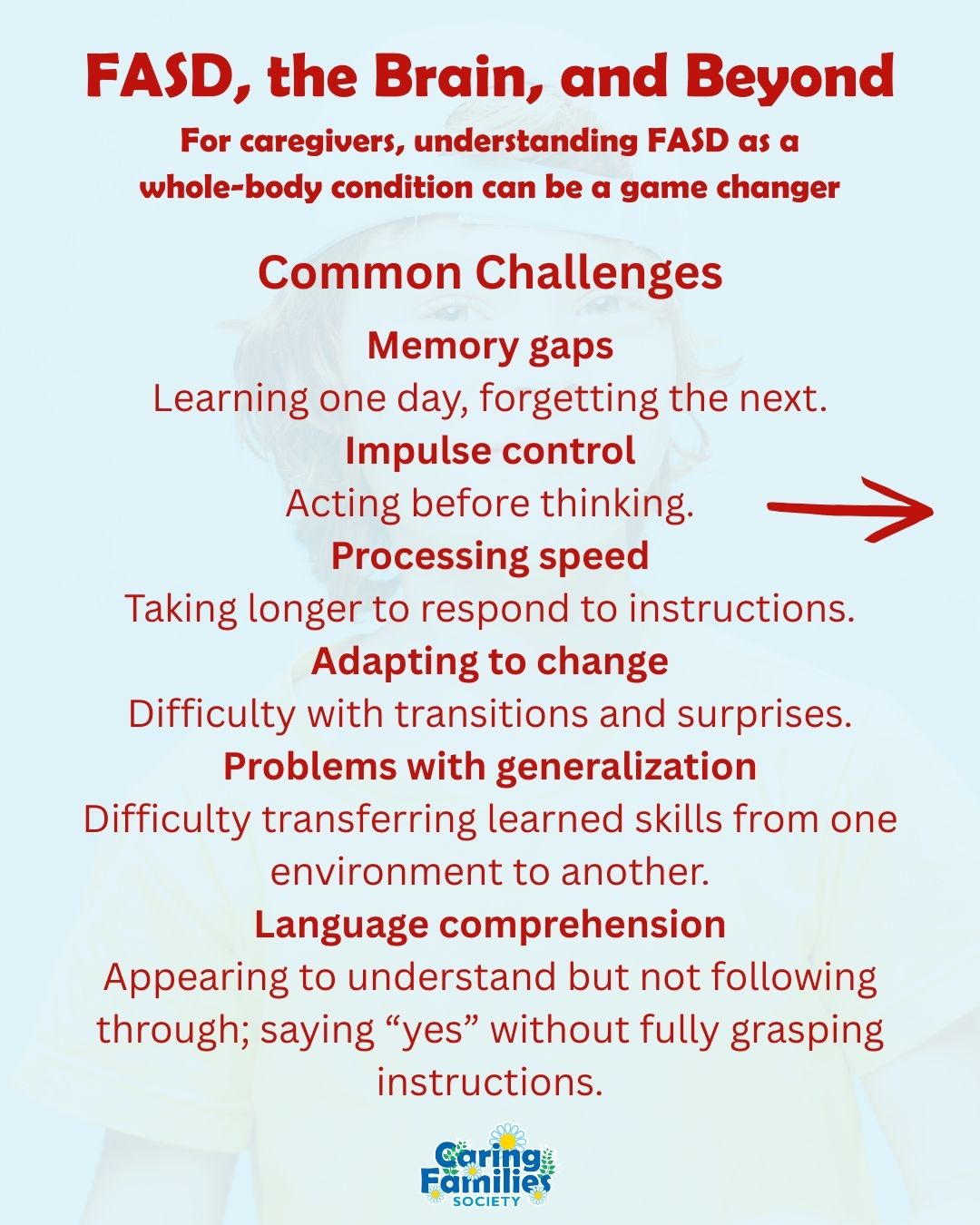
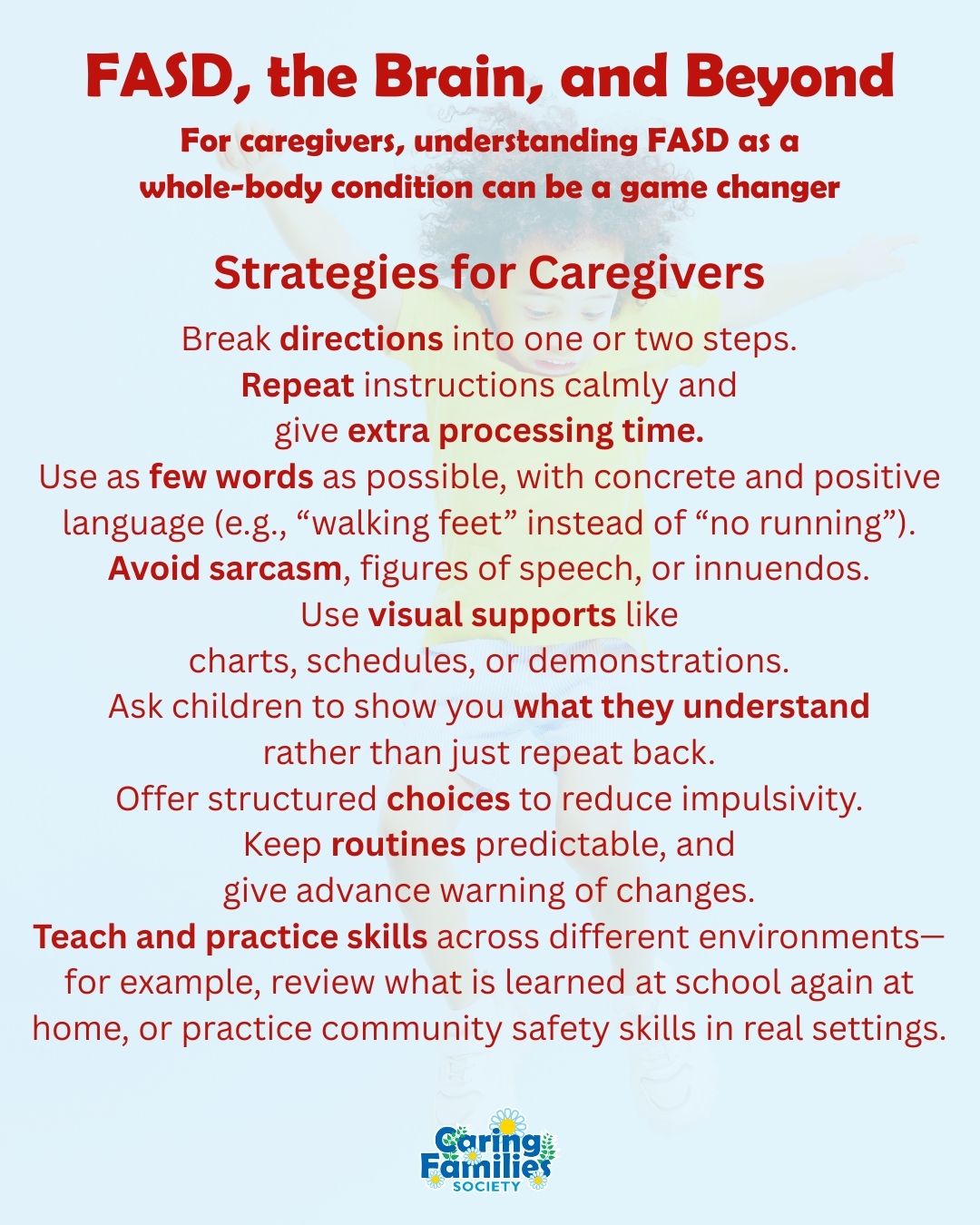
But FASD is more than a brain-based disorder. Alcohol exposure can disrupt the nervous system, immunity, digestion, growth, sensory processing, adaptive functioning (daily life skills), and sleep patterns. This is why caregivers often see challenges that extend far beyond home and the classroom.
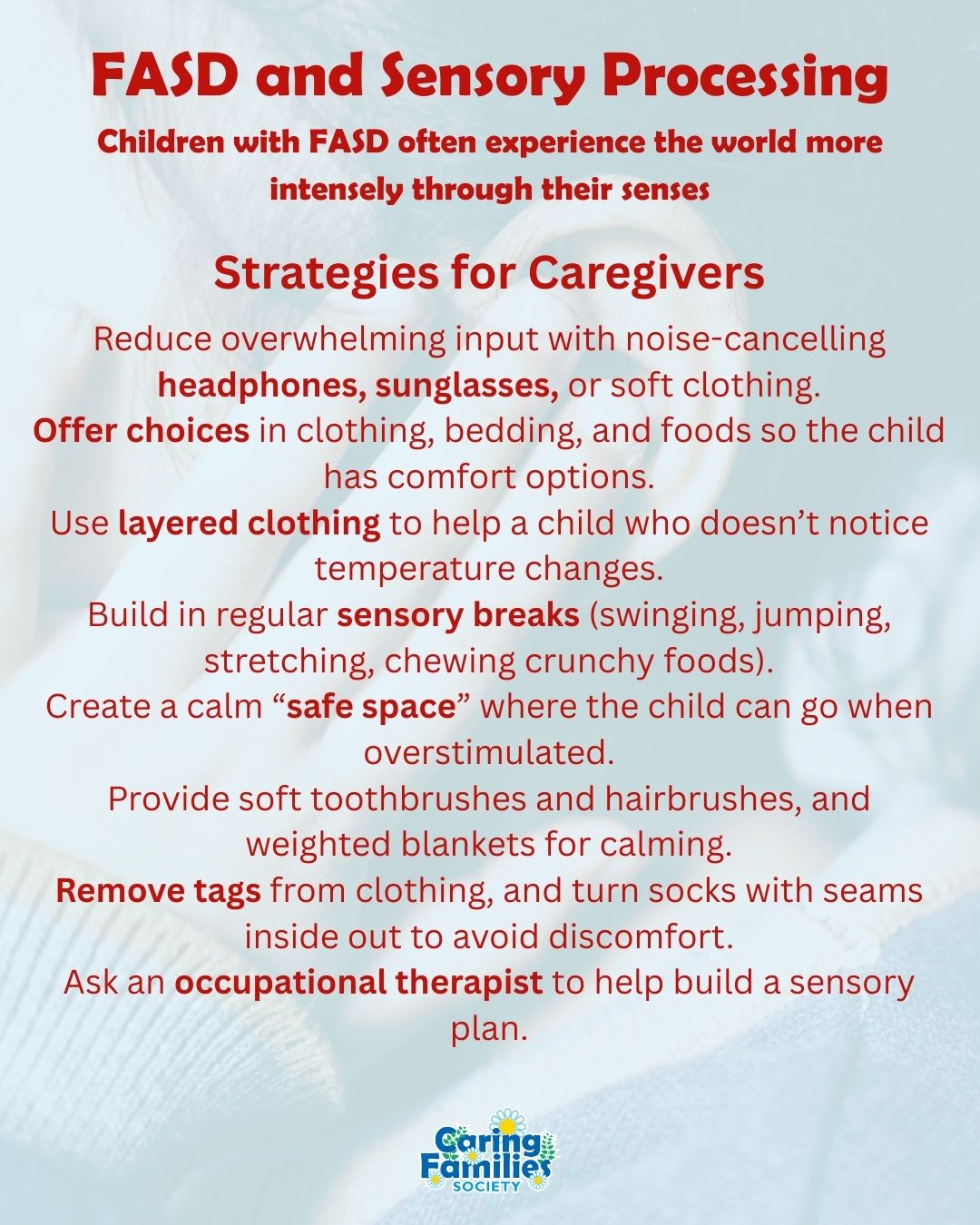
Sensory Processing
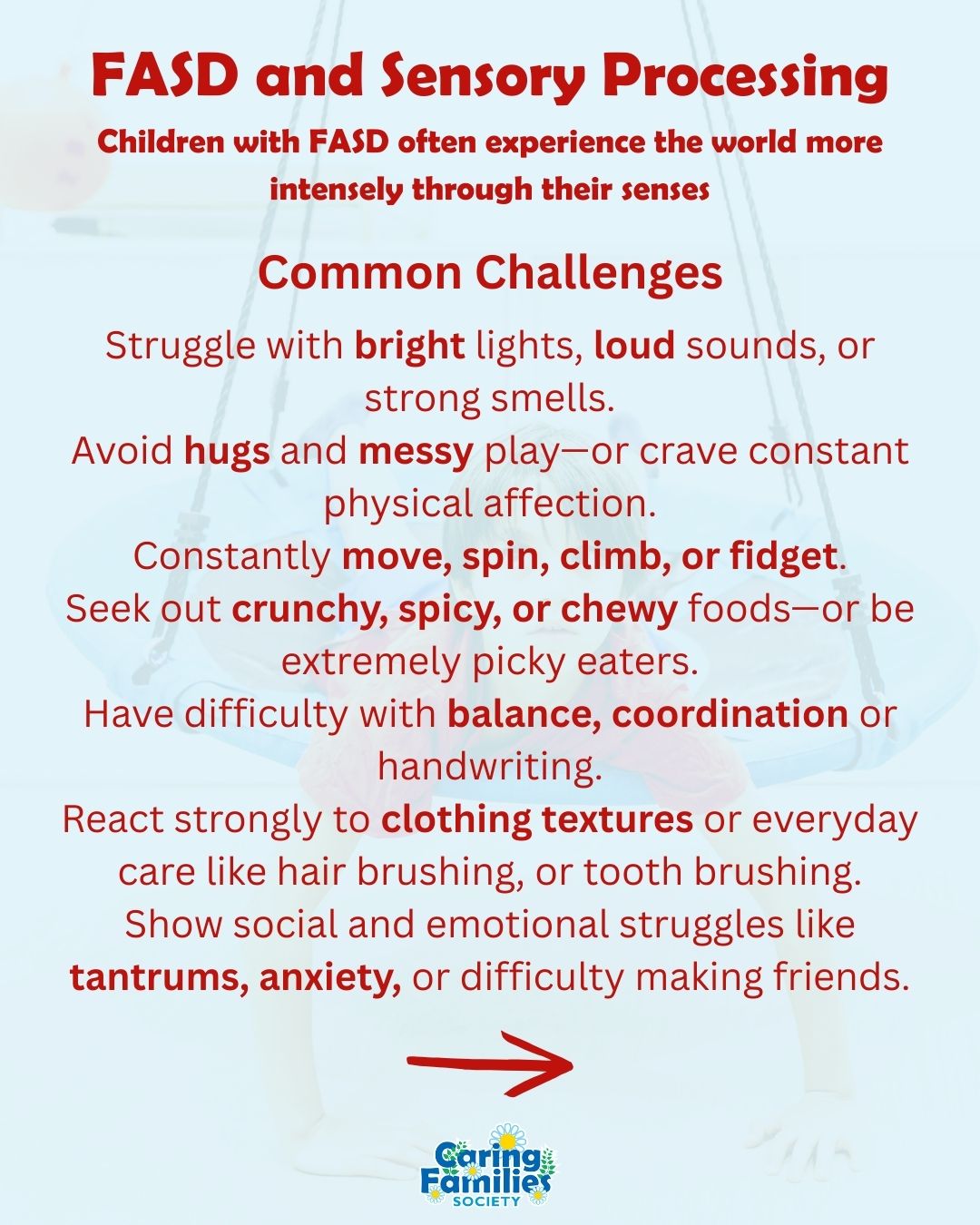
During the second trimester, sensory systems (touch, taste, hearing, vision, balance) are developing. Alcohol can disrupt how these systems connect to the brain. Children with FASD often experience the world more intensely through their senses. Bright lights, loud noises, or clothing textures can be overwhelming or even painful. This is part of how the nervous system processes input, and it helps explain many of the daily struggles children face with routines, behaviour, or emotional regulation. For example, what seems minor to us can be a major challenge for a child with FASD. Something as simple as a scratchy tag on the back of a shirt, the hum of fluorescent lights, or the seam on a pair of socks can distract them from sitting still or focusing on learning in the classroom.
Sensory Processing Disorder (SPD) is closely related to the sensory challenges seen in children with FASD. A child might experience challenges in one sensory area but not in others, or have a mix of sensitivities across multiple categories:
- Tactile (touch)
- Visual (sight)
- Auditory (sound)
- Gustatory (taste)
- Olfactory (smell)
- Proprioception (body awareness)
- Vestibular (balance and movement)
- Interoception (internal body signals like hunger, thirst, or temperature)
SPD usually shows up in the following main patterns:
- Seekers (Hyposensitive): Children who crave sensory input. They may constantly move, touch everything, fail to notice hot or cold temperatures, or seek out intense physical experiences.
- Avoiders (Hypersensitive): Children who are highly sensitive. They may overreact to touch and shy away from certain sounds, textures, clothing, or movements.
- Mixed Responders: Some children show both patterns, depending on the sense involved.
Sleep
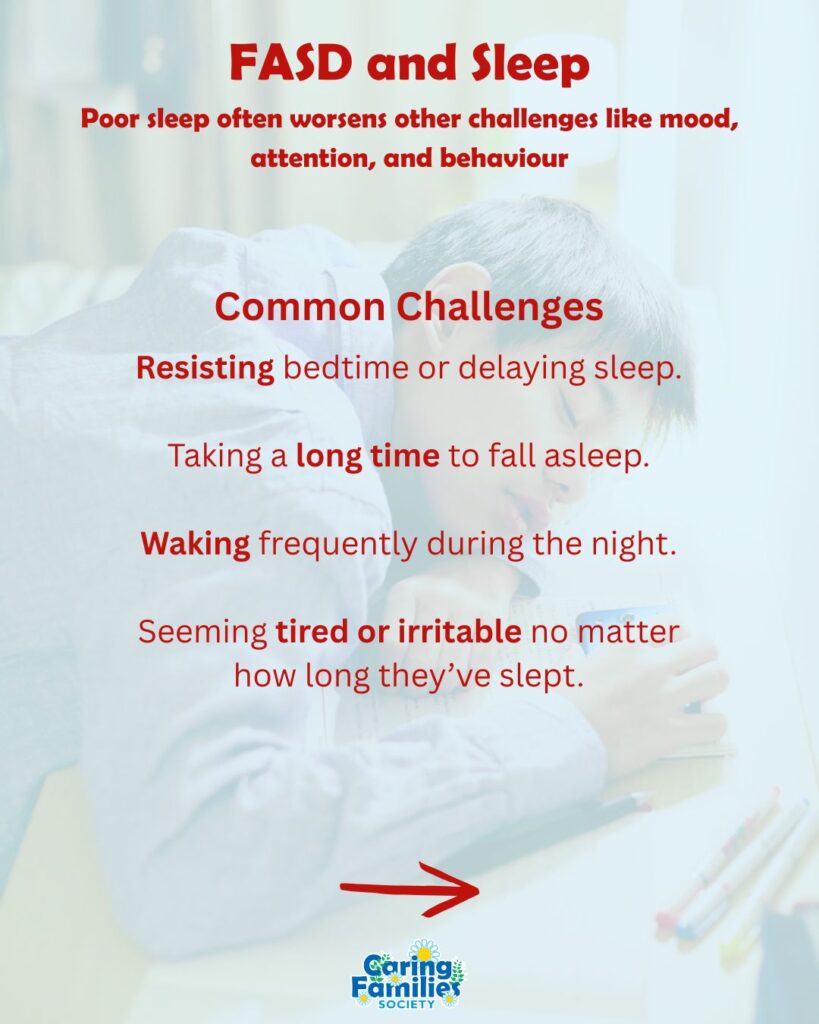
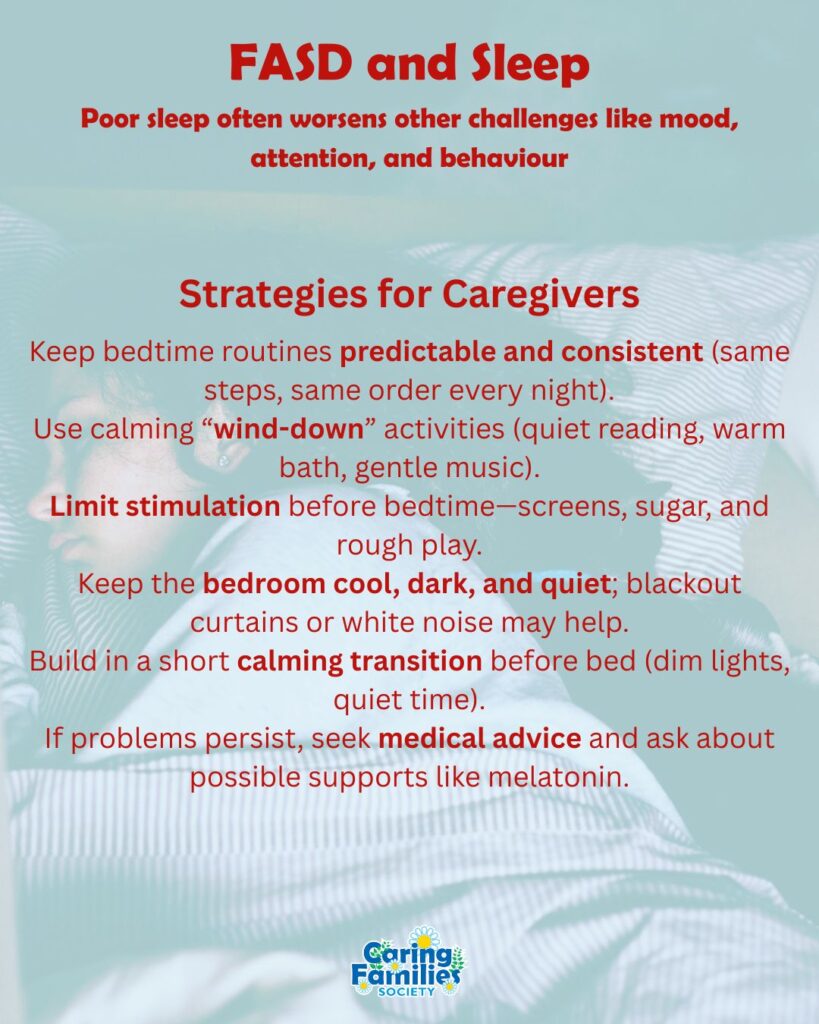
Sleep disruptions are very common in FASD. Brain regions that regulate sleep-wake cycles (circadian rhythms) can be disrupted during pregnancy, making it hard for children to get restorative rest. Poor sleep often worsens other challenges like mood, attention, and behaviour
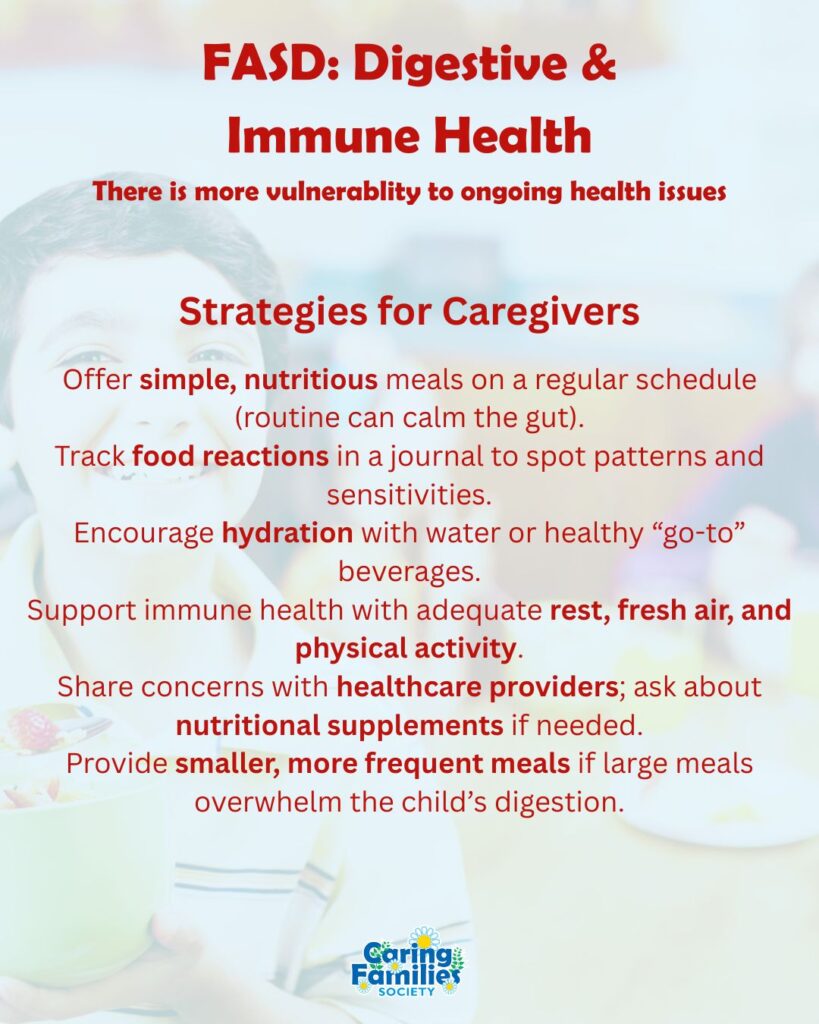
Digestive & Immune Health
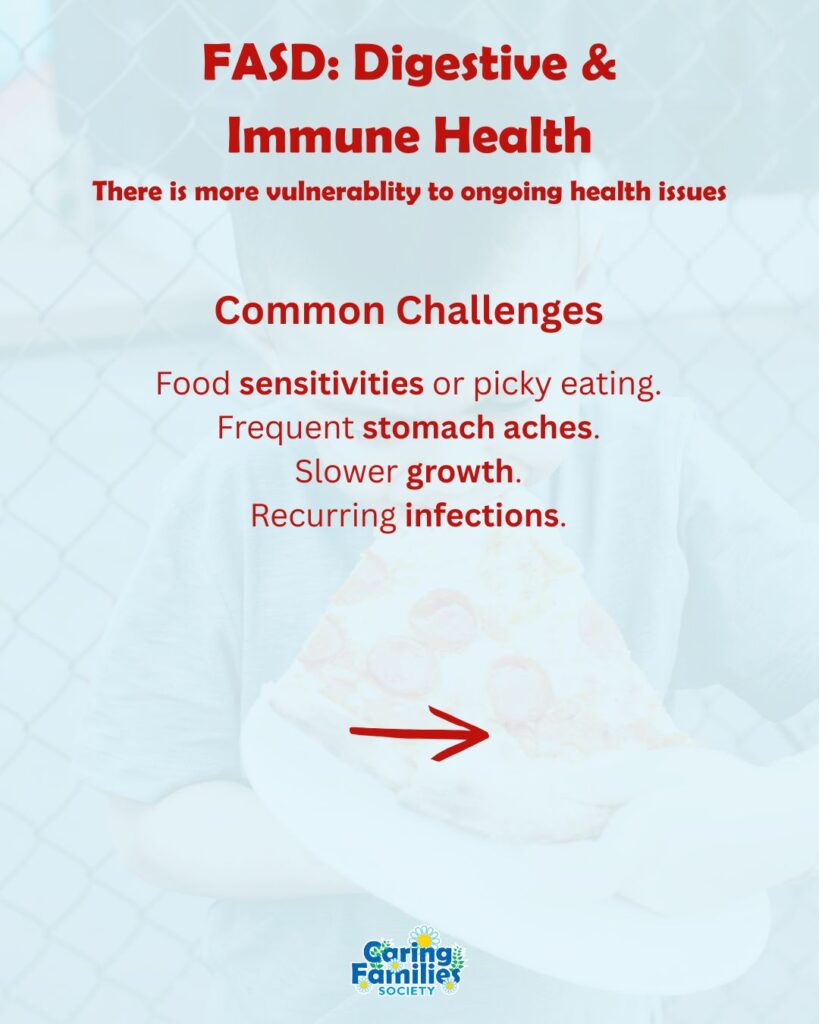
During the first and second trimesters, organs like the stomach, liver, and immune system are developing. Alcohol exposure can interfere with how these systems function, leaving children more vulnerable to ongoing health issues.
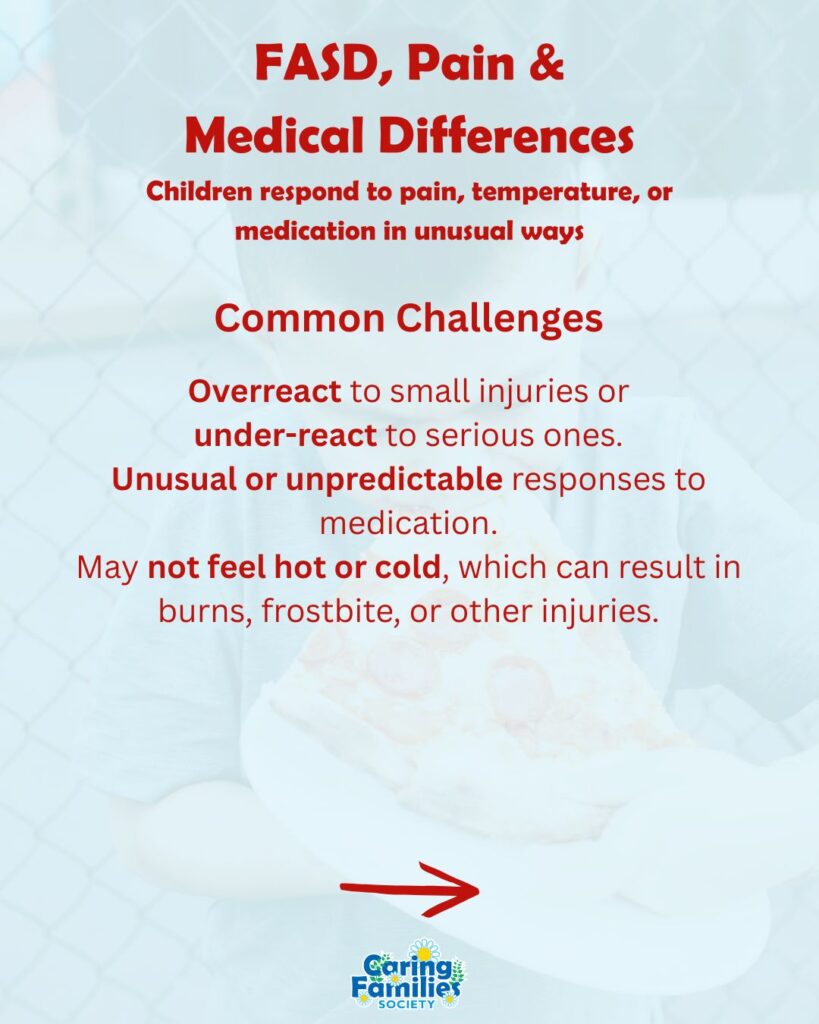
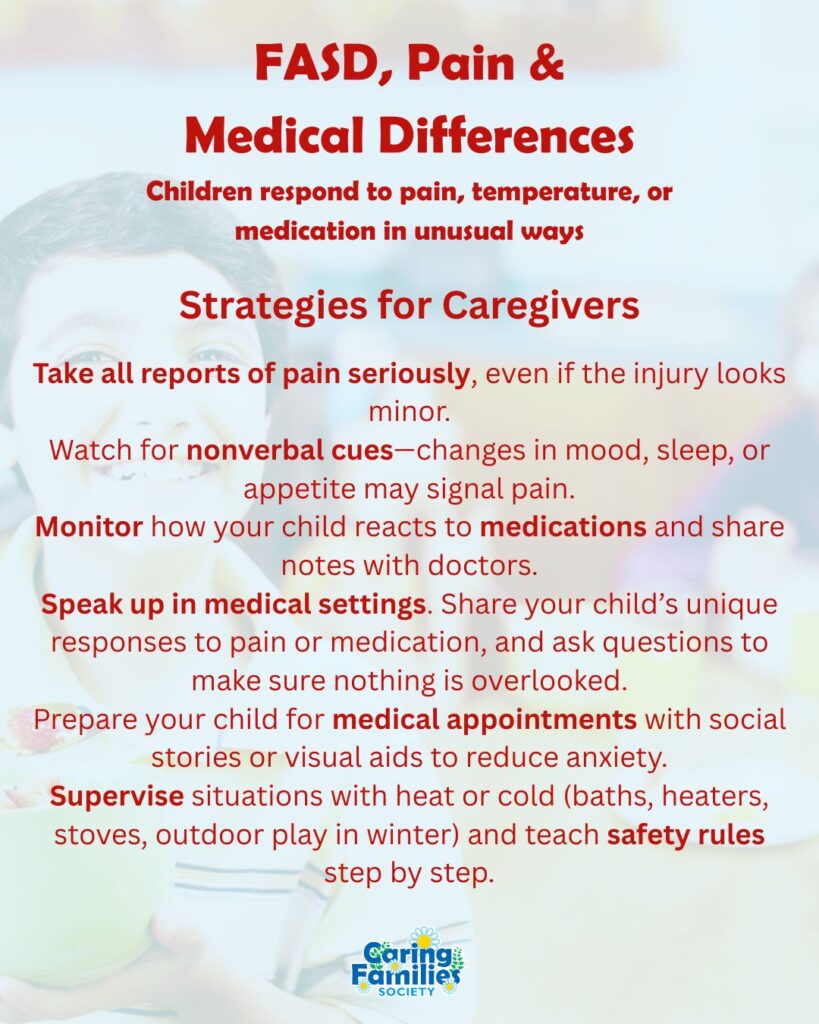
Pain & Medical Differences
Nerve pathways and pain regulation systems may develop differently, especially with alcohol exposure in the second trimester. This can mean children respond to pain, temperature, or medication in unusual ways.
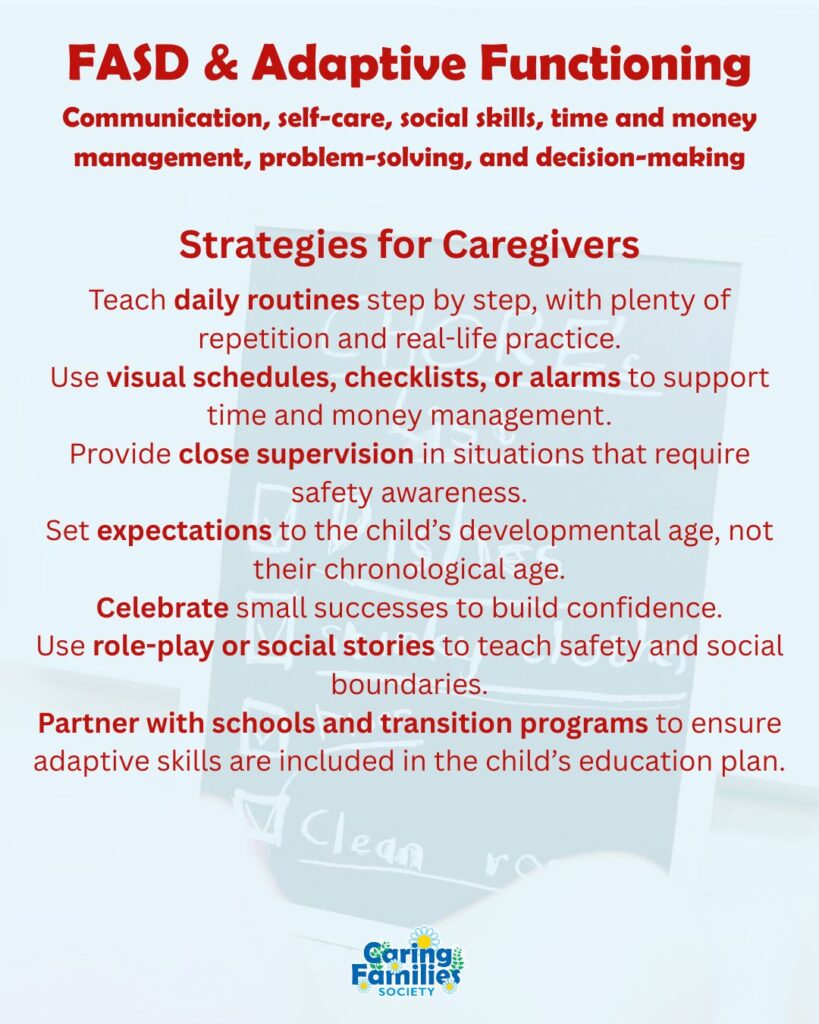
Adaptive Functioning
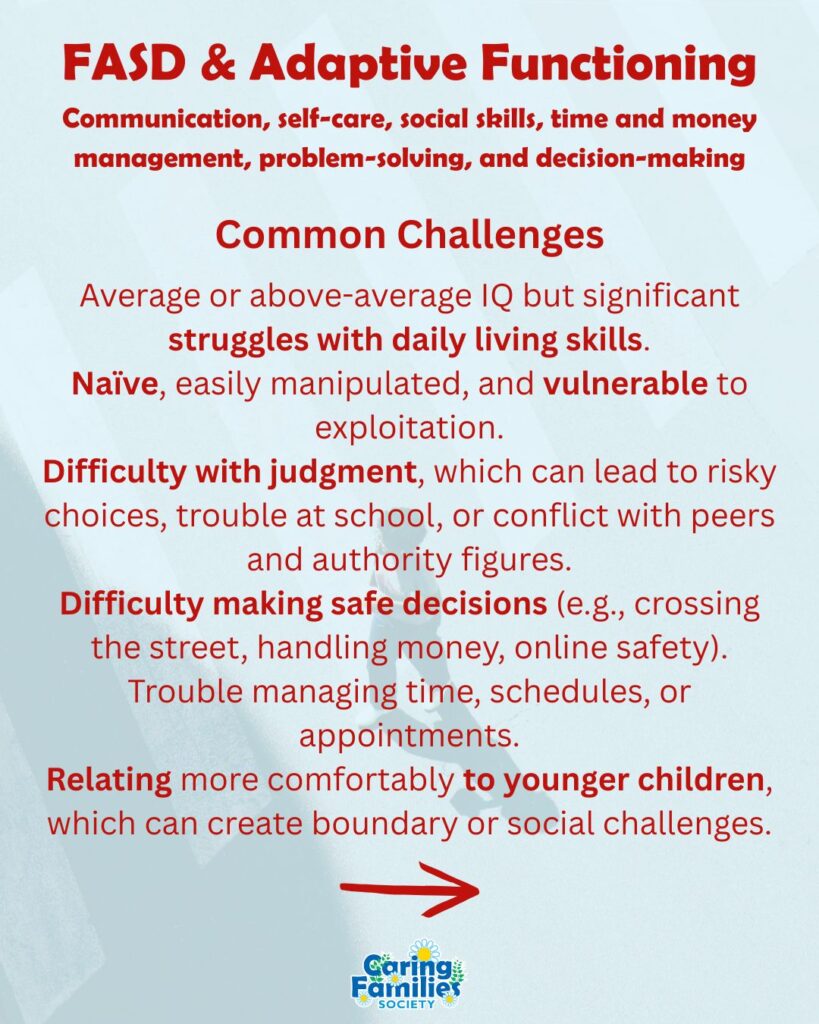
Adaptive functioning refers to the practical, everyday skills people need to live independently and safely. These include communication, self-care, social skills, time and money management, problem-solving, and decision-making. While intelligence (IQ) measures how well someone can think and learn, adaptive functioning measures how well they can put that knowledge into practice in daily life.
For children and youth with FASD, adaptive functioning is often one of the biggest areas of difficulty. A child may score well on an academic test but still struggle with everyday tasks—like knowing the months of the year, remembering important dates, crossing the street safely, handling money, or keeping track of time. This gap between what they “know” and what they can actually do in daily life is a hallmark of FASD.
This is sometimes called dysmaturity—when a child’s developmental age is much younger than their actual age. For example, a teenager may read at grade level but still need help with routines, safety, or friendships, much like a much younger child. Recognizing dysmaturity helps caregivers set realistic expectations and provide the right level of support.
Strong adaptive functioning is what allows someone to manage the “nuts and bolts” of life—like paying bills, keeping appointments, cooking a meal, and understanding safety risks. Without support, people with FASD are more vulnerable to being taken advantage of, struggling in school and work, or facing difficulties with the justice system.
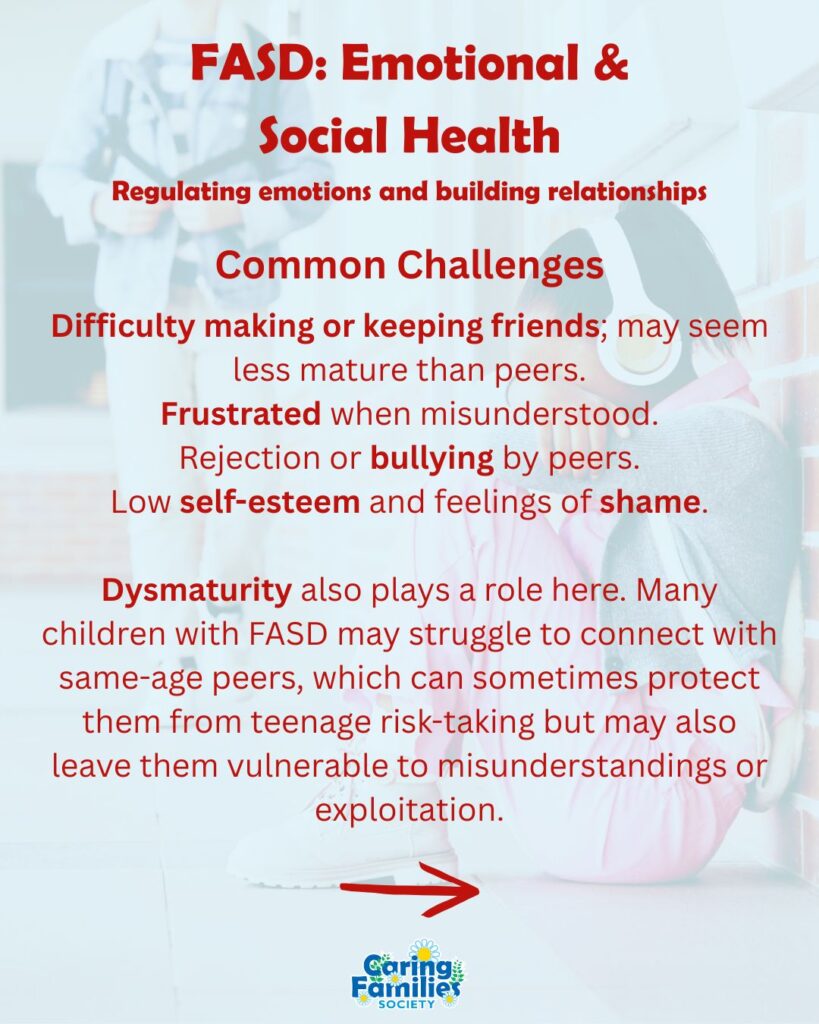
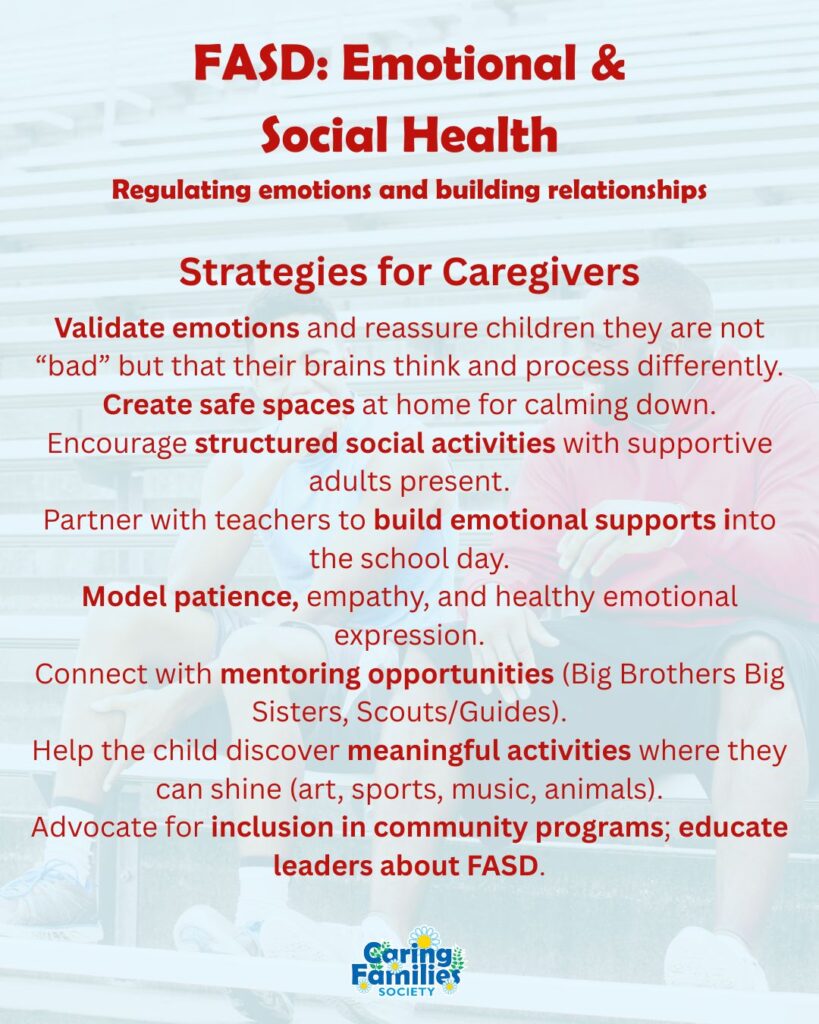
Emotional & Social Health
Brain circuits for emotions, bonding, and social interaction continue developing into the third trimester and beyond. Alcohol exposure can heighten sensitivity in these areas, making it harder for children to regulate emotions and build relationships.
Self-Care for the Caregiver
Fostering a child with FASD is demanding. Caregivers need support to remain strong.
Strategies for Caregivers
- Ask for respite when needed.
- Join caregiver support groups.
- Build a personal self-care routine.
- Recognize that seeking help is a strength, not a weakness.
- Apply for a mentor through the Caring Families Society Mentoring Program.
Closing Thoughts
Recognizing FASD as a whole-body condition helps caregivers see the full picture of a child’s needs—beyond learning or behaviour. Prenatal alcohol exposure can leave lasting effects on sleep, digestion, immunity, pain response, adaptive skills, and emotional health.
By understanding this whole-body impact, caregivers can move from seeing children as “difficult” to recognizing them as individuals with unique needs shaped long before birth. When you understand the why, you can better support the how—helping children with FASD thrive in ways that honour both their strengths and their challenges.
Read more in this series:
FASD and the Education System in BC: A Foster Caregiver’s Guide
FASD Awareness Day: Why Talking About Drinking During Pregnancy Matters